
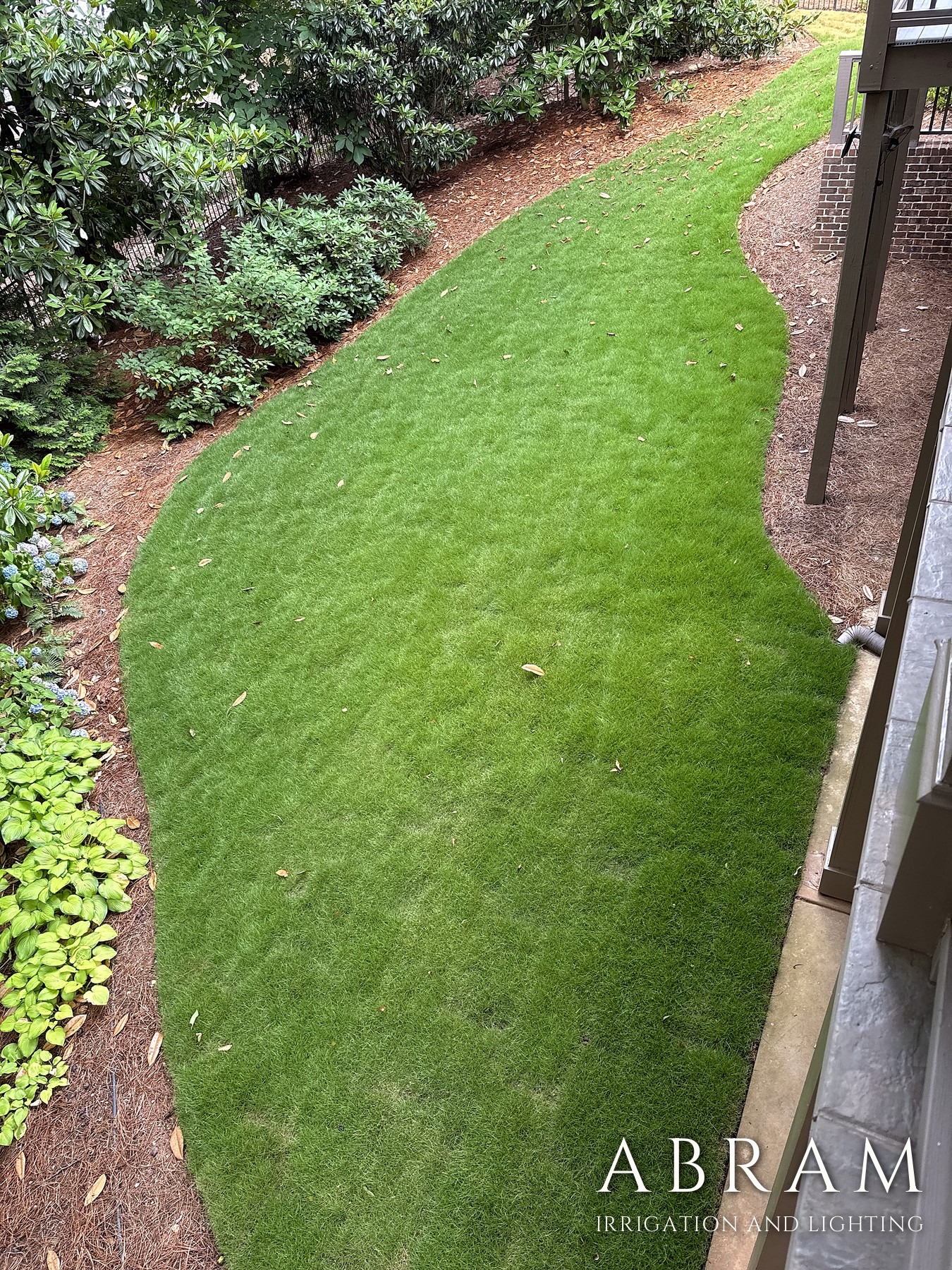
By mid-July, North Atlanta lawns are under real stress. Long days, high heat, and our heavy red clay all work against you at once — and the most common reaction, watering a little every day, is usually the thing making it worse. Here’s how we coach homeowners through the hottest stretch of the year.
Water in the early morning, not the evening
The best window to run your system is before sunrise — roughly 4 to 8 a.m. Two reasons. First, less water is lost to evaporation when it’s cool and still, so more of it actually reaches the roots. Second, the blades have all day to dry out. Watering in the evening leaves grass wet overnight, and warm, damp turf is where fungus and disease take hold. Midday watering is the worst of both worlds: you lose a lot to evaporation and you can scorch wet blades in direct sun.
Water deeply, but less often
This is the single biggest shift for most lawns. A short daily sprinkle only wets the top inch of soil, which trains roots to stay shallow — exactly where the heat can cook them. Instead, water longer and less frequently so moisture soaks down and roots chase it deeper. A deeper root system is far more drought-tolerant, so your lawn coasts through a hot spell instead of browning at the first missed day.
For most established North Atlanta lawns, a few longer sessions a week is a better starting point than daily runs. The exact schedule depends on your grass type, sun exposure, and slope — which is why we set zones individually rather than running the whole yard on one clock.
The clay problem: cycle and soak
Georgia red clay can’t absorb water quickly. Run a zone too long in one shot and the water pools on the surface, then runs off down the driveway before it ever soaks in. The fix is cycle-and-soak: split a zone’s run time into two or three shorter bursts with a gap between them. Each burst puts down water the clay can actually take; the gaps let it soak before the next round. Most modern controllers can do this automatically once it’s set up — you get the deep watering you want without the runoff.
Read the lawn, not just the calendar
A timer is a starting point, not a rule. During a heat wave your lawn may need more; after a good rain it needs none. A few things to watch for:
- Footprints that stay. If the grass doesn’t spring back after you walk across it, it’s thirsty.
- A bluish-gray cast. Healthy summer turf is green; a dull blue-gray tint means it’s drying out.
- Dry spots that keep returning in the same place. That’s usually a coverage or head problem, not a scheduling one — and worth having looked at.
A rain sensor or smart controller takes a lot of the guesswork out of this. It skips a cycle after a storm so you’re not watering a soaked lawn, which saves water and protects the grass.
When to call
If you’re doing everything right and still fighting brown patches, dry corners, or a zone that won’t cover evenly, the system itself is usually the culprit — a clogged or tilted head, a cracked line, or zones that were never balanced for the yard. That’s a quick diagnosis for us, and it’s the difference between babysitting your lawn all summer and letting the system carry it. We’re fully mobile across North Atlanta and happy to take a look.